Why Branded Blogs Fail to Appear in AI-Generated Answers
AI answer engines require independent verification of claims, not vendor self-promotion.
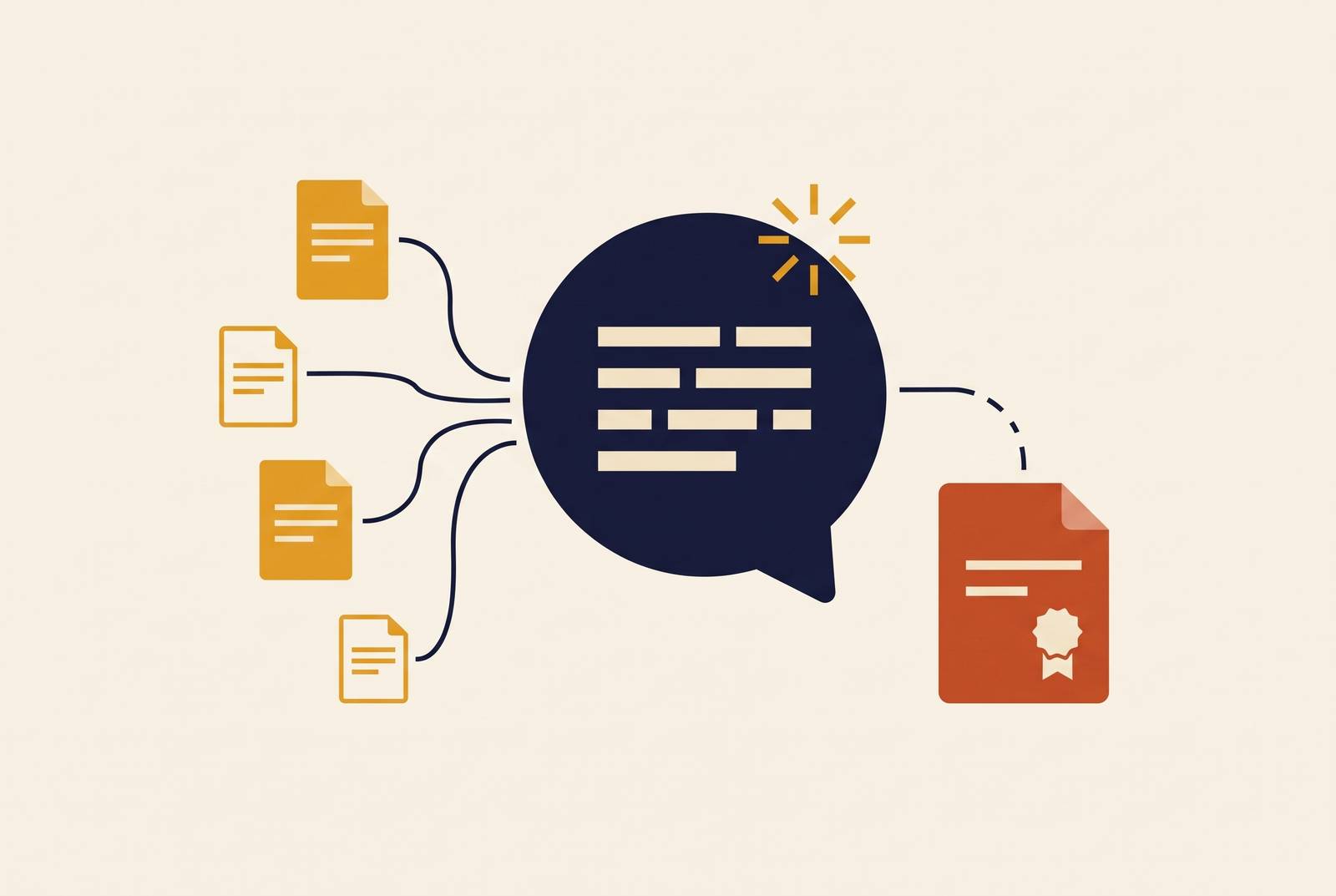
Branded blogs often fail to appear in AI-generated answers because answer engines need independent support for their claims. The central obstacle is source origin. A vendor can make its content easy to find and quote without making its claims independently checkable. Credible third-party coverage plays a different role from on-site optimization.
Why AI answer engines exist to verify, not to promote
AI answer engines retrieve, rank, and cite sources so their answers draw on real information that people can trust. The system gathers candidate pages, assesses their relevance and trust signals, composes an answer, and attaches citations to support specific sentences. A citation therefore serves as evidence for a statement.
At citation time, a source must be able to independently verify the claim being made. Clear writing can explain a claim without showing why it should be trusted, especially when the author gains from people believing it. The engine’s need for corroboration therefore changes what counts as a strong source. A page that persuasively describes a product’s value is not necessarily evidence that the product merits inclusion in an answer.
This differs from the visibility test that SEO has trained marketers to pass. Search ranking can bring a page before a reader who then evaluates it. An answer engine performs part of that evaluation before presenting its response, so the source must support the answer.
How the retrieve-rank-cite pipeline actually selects a source
Source selection involves three distinct gates, which are findability, quotability, and checkability. Each gate answers a separate operational question. Findability is required for a page to enter the candidate pool. The engine rewrites the user’s query into several sub-searches, and a page must be indexed and eligible to appear among the resulting candidates. Passing this gate establishes availability.
Quotability allows the system to extract a useful passage from the page. The passage needs to answer a question cleanly without depending on surrounding material that the response will not include. The AI layer can use an explanation that stands on its own in an answer, while facts spread across a page are harder to extract as a whole. This is why answer engine optimization extends beyond ranking to extractability.
Checkability tests whether other sources back up the claim that was extracted. The engine cross-references sources rather than treating every quotable passage as sufficient evidence. An assertion that appears on only one site lacks the corroborating web of external validation that signals wider acceptance. The distinction becomes especially important when that site also benefits from the claim. Retrieval, extraction, and corroboration are connected stages, but success at one does not guarantee success at the next.
Why a vendor asserting its own relevance fails the checkability gate by design
A vendor’s assertion of its own product’s value cannot serve as independent verification of that value. The author has an obvious incentive to overstate the product’s relevance, so the assertion lacks the independent evidentiary weight the system is seeking. The author’s incentive persists even when the claim becomes clearer or more comprehensive, creating a structural limitation.
The multi-source consensus mechanism makes that limitation consequential. Answer engines look for assertions supported by industry publications, independent reviews, and unaffiliated sources. Those sources contribute external validation because their relationship to the claim differs from the vendor’s. Human experts weigh evidence in much the same way. A third-party comparison or an actual user’s account can support a product assessment in a way that the product’s own marketing cannot.
Strong E-E-A-T signals and good search rankings can establish that a page is credible enough to enter the candidate pool and useful enough to quote. Source diversity therefore limits the citation share available to a brand’s own domain, and further on-site optimization cannot meaningfully remove that constraint. Earned third-party coverage addresses the missing corroboration.
The ghost citation problem: being retrieved is not the same as being recommended
AI tools cited a branded blog post again and again over several weeks, but none of those responses named the brand. The post cleared the quotability gate without supplying the independent recognition needed for a recommendation. A source link alone did not put the company into the answer the buyer read.
A ghost citation occurs when an answer links to a domain but does not name the brand in its response text. The phenomenon is widespread across ChatGPT, Gemini, AI Overviews, and AI Mode, although reported rates vary considerably with the engine and measurement method. Content citation rates are much higher when the brand also appears by name than when it is absent from the answer.
The system can use a passage to support accuracy without treating the publisher as a product worth recommending. Consequently, a citation count can describe successful extraction while concealing a failure to reach the buyer’s consideration set.
Where the citations actually go: the long tail of independent sources
The citation landscape extends well beyond brand domains and tier-one media. Niche publications, specialist blogs, and independent community content account for the bulk of citation activity described in the B2B SaaS findings. The long tail is the competitive terrain. Its importance comes from the range of external sources available to corroborate specific claims.
The reported share of citations that go to brand-owned sites ranges from small single-digit shares in some samples to higher shares in larger studies. Competitor domains also receive a share, but sites owned by neither side dominate the pool. The exact distribution depends on the analysis. The consistent strategic distinction is between a company’s own claims and the much larger body of outside material from which engines can construct an answer. That makes independent coverage a separate visibility surface.
Even household-name brands appear in fewer than half of the relevant answers on the first run, while established mid-market brands appear less often and niche brands less often still. Recognition alone does not override source diversity. Independent citation can help narrow that visibility gap because the long tail gives specialist sources a role in validating claims about less familiar companies.
Why independent, niche publications earn the citations that branded blogs cannot
Independent publications supply the kind of evidence that vendor-authored claims lack. Their authorship changes the role of the assertion. When a niche trade outlet assesses a product, its coverage can function as external validation. A publication with its own name, domain, and editorial voice can therefore contribute to the consensus mechanism that limits a branded blog.
More than half of citations go to earned sources, and earned distribution gets content cited far more often than pages that brands own. Content quality still affects how much the material helps.
HubSpot illustrates the distinction in the query “best free CRM for small business.” The brand appears as the top AI Overview recommendation, and the cited source is Zapier. The recommendation rests on third-party coverage. The vendor receives visibility even though its domain is not the source used to substantiate the answer.
Outdoor Vitals moved from no AI presence to citations in 22 of 60 monitored AI results within days. The products, founder, and branded content were the same, while the independent content layer changed. BabyRx also earned AI citations in the three-week pre-launch window by sharing structured category data on independent sites. These cases locate the change outside the branded blog, where answer engines could find material with a different source signal.
What a credible independent publication requires to function as a citation source
A separate domain is not sufficient evidence of editorial independence. The publication must function as a real outlet. Its own name and voice need to be supported by factually dense content, clear sourcing signals, and editorial judgment. A low-effort content farm does not satisfy that standard merely by avoiding the vendor’s branding.
Extractability remains necessary within that editorial framework. Content must be split into answerable units, with passages that stand on their own and answer specific sub-questions. Query fan-out expands a broad topic into several questions processed in parallel, so a page that addresses only the head query may provide useful material for only part of the search. A focused comparison can serve this structure when it assesses the options factually and on their merits. Its value lies in resolving the question.
Eligibility also depends on recognizable credibility signals. Author credentials, clear entity references, and schema that matches what the page says help decide whether an outlet gets into the candidate pool. Freshness then affects continued citation activity. Sources can lose substantial citation activity within weeks of publication, so a sustained publishing cadence is part of maintaining visibility.
Future is commercializing this connection between publishing and AI visibility through Future Optic. The publisher, whose titles include Tom’s Guide, Who What Wear, and Marie Claire, offers the tool within branded content packages intended to boost citations in Google’s AI Overviews and ChatGPT. That commercial interest makes editorial independence more important. A publishing package and a credible source are not automatically the same thing.
How to measure whether independent publication is working
Measurement needs to distinguish evidence selection from brand visibility and business results. Citation share shows whether the publication is becoming part of the source pool used in answers. Brand mention rate shows whether the company itself appears in the response, while share of voice places that presence in a competitive context. These measures capture different stages of the outcome. Raw traffic and ranking position cannot substitute for them because they describe a different part of the buyer journey.
A high ghost citation rate means that sources get links but the brands go unnamed. The material may be clearing the quotability gate while failing to establish the recognition needed for recommendation. That points to the remaining gap in brand recognition rather than proving that more extractable content alone will solve it. When citations grow but mentions do not, the results are still incomplete, though the publication strategy may still be working.
Assisted conversion links being seen in answers to value for the business. Click traffic from AI sources remains useful, but it is a lagging and incomplete signal when buyers can encounter a brand before visiting its website. HubSpot’s own 2026 data reports that lead conversion from AEO-sourced traffic was 3x higher than from other sources. The company also reports that buyers arriving from answer engines are more qualified by the time they reach a page.
Independent publication pays off when trusted evidence from outside the company helps the brand appear in relevant answers and brings better-qualified buyers closer to a decision.