How AI Agents Are Changing B2B Brand Discovery
Vendors must build credibility beyond their websites to appear in AI-driven shortlists.

AI agents are changing B2B brand discovery by shaping the shortlist before a buyer reaches a vendor’s website or sales team. Brands need a clear identity, usable information, and independent corroboration across the sources AI systems consult. Without that foundation, even a strong product can be absent when the buyer first decides whom to consider.
Where B2B buyers now form their shortlist — and why it is no longer on a search results page
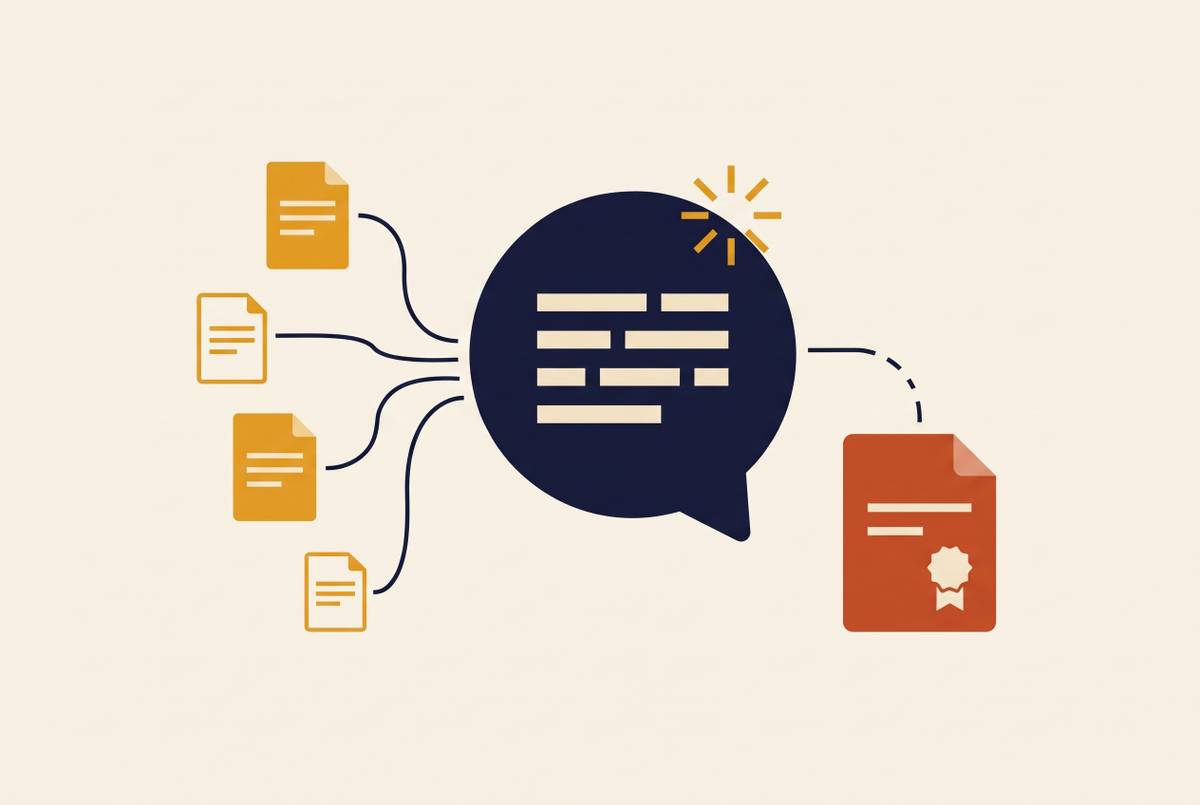
The shortlist now takes shape inside a conversation. A buyer describes a need to an AI answer engine, receives a set of vendors, and begins evaluating the options already selected. For that buyer, the search results page is no longer the starting point. The brand’s website may enter the process later, after the AI has determined which suppliers deserve attention.
The early cut is consequential because buyers begin with roughly seven-and-a-half potential vendors and narrow to roughly three-and-a-half before making a final decision. Conversational tools can now perform that narrowing before a salesperson has any opportunity to influence it. After a SaaS price increase, Penn asked Gemini Deep Research to identify five new providers, received a shortlist within minutes, and switched through the new vendor’s self-serve signup portal. There was no sales conversation or demo.
That example shifts the website’s role from discovery destination to a place where a decision can be completed. A brand left off the shortlist cannot count on a better landing page to win back a buyer who never thinks to visit.
Why AI agents gatekeeping the shortlist is categorically different from losing a search ranking
IDC’s dark funnel analysis places discovery inside systems beyond a brand’s direct control. The buyer receives a synthesized view drawn from analyst citations, peer review websites, press coverage, forum discussions, and social media. Much of that evidence sits outside the vendor’s domain. The brand is being evaluated before it can host the interaction.
Traditional SEO offered a different route to consideration. A company optimized pages, earned backlinks, and competed for a position in a ranked list that the buyer could inspect. An AI answer instead selects and synthesizes information into a response. At that moment, an omitted brand is absent from the buyer’s presented choices.
This distinction also changes what visibility means. Being cited means the AI uses a brand’s content as evidence, while being mentioned means the AI names the brand in its answer or recommendation. Those outcomes are not interchangeable. A vendor can supply useful information that helps explain a category while competitors receive the buyer’s attention. Because an answer can satisfy the query without a click, website traffic alone cannot reveal whether the brand influenced the shortlist or disappeared from it.
How AI systems actually decide which brands to surface in a commercial answer
AI selection rests on three interdependent signals, which are identity clarity, content extractability, and third-party corroboration. Identity clarity lets the system distinguish a brand from similar entities. Inconsistent naming, sparse descriptions, and missing structured data create ambiguity that can lead to omission.
Extractable content is readable by both people and bots, with claims, definitions, and explanations that can stand outside their original page. Promotional language works against that purpose because self-congratulation gives the system less useful evidence than a specific account of what a product does. Corroboration then supplies the external support that the vendor cannot provide alone. When independent sources agree with a claim, the system has a stronger basis for treating it as citable.
The signals operate across platforms, but their weighting differs. Google AI Overviews average 2.1 brands per unbranded response, compared with 9.6 for ChatGPT. Google draws on a blend of brand-managed and authoritative third-party sources, while other platforms use different source mixes. A presence that works on one engine therefore does not establish visibility on another. The selection logic is learnable, but the outcomes need separate measurement.
Why most B2B brands are structurally unprepared for this selection logic
IDC reports that only about a third of organizations have enterprise-wide content capabilities. That gap extends beyond the quality of a website. Integrated product information systems, AI-parseable digital asset libraries, and knowledge bases connected to public-facing repositories are part of the infrastructure required to make company knowledge available for synthesis.
The organizational mismatch follows from what marketing teams were built to achieve. Ranked search rewarded pages that attracted clicks, while brand programs often emphasized narrative and promotional distinction. That focus does not always make entities clear, give systems evidence they can extract, or get independent sources to agree. More content from the same operating model can leave the selection problem intact.
IDC also identifies reputation management, earned media, analyst relations, and community presence as foundations for AEO. PR has long handled this work rather than demand generation, so the evidence needed comes from more than one team. The gap is organizational before it is editorial. A demand generation team cannot close that gap just by changing page templates or adding structured data. The teams must link company knowledge that systems can access with information they can trust from outside the company’s own publishing channels.
Why owned content alone cannot solve an AI citation problem
Owned content has an unavoidable limit as evidence. A vendor can explain its capabilities accurately and thoroughly, but it cannot independently corroborate its own claims. Improving a page’s format may help a system extract the information without changing how it judges the source. This is where content quality and source credibility diverge.
AirOps’s 2026 State of AI Search analysis found that most early-stage brand mentions in AI answers come from external domains. Owned content represents a structural minority of the sources used during discovery. The same analysis links a strong off-site presence to much greater AI visibility than owned content alone. That finding shifts investment from increasing how much a brand publishes to establishing supporting evidence elsewhere.
A vendor that ranks itself first on its own “best of” page gains little citation benefit from that positioning. Even when an AI uses the page, it can recommend a competitor instead, discounting the promotional framing while extracting other information. Better material on the same domain cannot close a gap caused by the absence of independent support. AI systems can still answer questions about the brand using whatever others have written about it.
What third-party publication actually does for AI citation — and what makes it work
Third-party publication gives the system evidence from outside the vendor’s own account. An independent source provides corroboration by describing a capability, comparing alternatives, or documenting an example in a form that gives an AI system grounds to include the brand. The publication must earn credibility in its own right.
AirOps found that nearly all third-party mentions driving AI citations originate from listicles, comparison pages, and review roundups. These formats match commercial questions because they organize vendors and their differences into extractable choices. Position also influences visibility, with most mentioned brands appearing near the beginning of those pages.
Format alone, however, does not establish authority. Unique data, expert opinion, durable definitions, extractable frameworks, and corroborated examples distinguish useful coverage from generic roundups. Analyst coverage, press coverage, and investor content are other places to find evidence outside the brand’s domain. The effective venue is one the relevant AI systems actually draw from. This makes editorial specificity and source selection central to the strategy. A comparison that explains how products differ gives the system more evidence it can use than a page built around promotional claims or affiliate links.
Building independent publication infrastructure when earned coverage is slow or inaccessible
Earned coverage creates a timing problem for brands that depend on it. A company cannot guarantee when a credible publication will cover its category or include its product. Where that uncertainty makes coverage insufficient as a primary AEO channel, practitioners are building niche publications as durable editorial entities. These publications aim to keep providing information about the category so brands do not have to rely on a single PR win.
A separate domain is not enough to establish independence. The publication needs its own name, editorial voice, and substantive approach to the niche, rather than the appearance of a vendor content property. Because source independence contributes to trust, a nominally external site cannot solve the problem merely by moving promotional copy elsewhere. It must clear the citation bar independently.
That requirement makes this an editorial investment. Unique data, expert opinion, and specific user intent help the publication offer more than the information already in AI-generated summaries. A group of credible niche publications can create a more consistent presence across the information environments answer engines consult. Its value depends on maintaining depth and specificity across those properties.
IDC frames AEO as a long-term investment in deep, authoritative, interconnected content infrastructure. Independent publishing fits that logic only when treated as a durable asset. The relevant horizon expands from a 90-day campaign to a 12-month infrastructure investment.
What AEO demands from B2B marketing operations that SEO never did
AEO does not replace SEO or remove its technical foundations. Structured data, clean crawlability, page speed, and entity clarity remain necessary because inaccessible information cannot contribute effectively to an answer. Those foundations are a starting point. The optimization target now extends from document ranking to answer synthesis.
Brand mentions correlate more strongly with AI visibility than backlinks, and unlinked mentions in reviews, industry coverage, and community discussions can influence recommendations. A link-building program does not necessarily capture those signals. Reputation has become part of the information infrastructure that supports selection.
IDC says this requires the teams that handle reputation management, earned media, analyst relations, and community presence to work together. The function responsible for AEO must connect disciplines that have historically operated separately. This requires a shared view of how those activities support AI visibility. Owned content, outside coverage, and technical accessibility cannot be evaluated as unrelated outputs.
Measurement is the immediate practical test of that coordination. Tracking search rankings does not show whether an answer engine cites the company’s material, recommends its brand, or favors a competitor. A team committing to AEO should establish an AI visibility baseline before building the program. Investing without tracking citations repeats the mistake of running a content program without tracking search rankings. The discipline is still young enough that establishing that baseline is itself a competitive move.
Why the brands that act before this becomes conventional wisdom hold a durable structural advantage
IDC argues that most organizations have not yet begun to address AEO, leaving room for brands to establish a presence before the field becomes crowded. Brands have an opportunity to build the evidence that AI systems can draw on before competitors assemble comparable support. That infrastructure takes time to develop.
The advantage can compound because AI systems draw on information that already exists in their training data and citation patterns. A brand with a strong third-party presence can become part of the model’s established understanding of a category. Later entrants then face the harder task of competing with those existing associations. This structural lead leaves future inclusion uncertain.
IDC also notes that major platforms are still working out how to monetize their models. Advertising may eventually give marketers more direct influence, but that prospect does not remove the need for a credible position in the underlying information environment. Independent publications, earned media, third-party mentions, and structured entity data serve that purpose across buying questions.
The resulting advantage appears on the buyer’s “Day One list.” That shortlist exists before the first sales conversation, assembled from evidence the AI can already find and use. The brands on it built their way into consideration before the question was asked.