Why Vendor-Authored Content Loses AI Visibility
AI systems prioritize independent corroboration over brand-controlled sources.
Vendor-authored content is losing ground in AI search, and the reason has almost nothing to do with quality. It comes down to where the content lives. Google's AI Overviews now reaches more than 2.5 billion monthly active users, and AI Mode crossed 1 billion monthly users within its first year on the market. ChatGPT and Gemini have each pulled in hundreds of millions of monthly users of their own, and none of this is Google losing share so much as the whole map of "search" getting bigger. The questions people type have changed too: a typical search query is about 3.37 words, but the average ChatGPT prompt is 23 words, with some stretching far longer. People are typing full descriptions of their situation now. They're describing their situation.
That shift in query length says something real about intent. A three-word search is a guess at a keyword. A 23-word prompt is a buyer explaining what they need, in context, to something they expect to understand them. And the response to that prompt looks nothing like the search results page it's replacing. Instead of ten blue links to sort through, the AI engine compresses what used to be a multi-click, multi-session research process into one synthesized answer, and that answer usually names one or two sources, not ten.
That's the whole game now. For years, brands asked "do we rank?" That question still matters, but it's no longer the one that decides visibility. The question that decides it is "do we get named?"
How AI answer engines choose a source
Three things have to happen before an AI answer names a source: retrieval, extraction, and attribution. Ranking well in Google only buys a page a shot at step one. It says nothing about steps two and three, and that gap is exactly where most vendor content quietly disappears (of the three steps that govern whether an AI answer names a source: retrieval, extraction, attribution), ranking only helps with the first one.
The mechanism works as follows. Most of these systems run on retrieval-augmented generation, or RAG: the model pulls live documents from the web first, then writes its answer using those documents as evidence. Being indexed isn't the bar. Being usable is.
Google's own AI Mode adds another wrinkle with something it calls query fan-out: it breaks one question into a batch of sub-questions and runs them all at once. A page that answers only the headline keyword and ignores the surrounding sub-angles of a topic has a much smaller surface area to get pulled into that process.
The data on where this leaves traditional ranking is blunt. Ahrefs ran an analysis covering hundreds of thousands of keyword SERPs alongside millions of AI Overview URLs, and found that well under half of the URLs cited in AI Overviews also showed up in the first page of organic results. Close to a third didn't rank anywhere in the top 100 at all. And this gap opened fast: Ahrefs saw heavy overlap between AI citations and top-10 rankings as recently as mid-2025, and within months that overlap had collapsed to something closer to a coin flip. Moz found much the same pattern across tens of thousands of queries: most Google AI Mode citations don't appear in the organic results for that same query, and only a small slice match the exact URLs sitting in the top 10. A December 2025 paper from Zhang et al. found that 37% of AI-cited domains never appear in traditional search results for the same query at all. Different signal, different game.
So if rank isn't what AI systems are reading, what is? Consistency with other reliable sources, verifiable authorship, content that's structured for easy extraction, and freshness. A site earns authority when what it says lines up with what other credible sources say, and when a model can pull it out and reuse it without much risk.
The trust signals that determine which sources AI systems select
Corroboration outranks position. AI systems treat agreement across multiple independent sources as a stand-in for reliability. A claim sitting alone on one vendor's page carries less weight than the same claim repeated by several sources with no reason to coordinate.
Authorship matters more than most brands assume. Pages with a visible author byline show a meaningfully higher citation odds ratio in ChatGPT, 1.40, against a cross-engine average of 1.12. A named, recognizable expert attached to a piece makes it substantially more citable than the same information published anonymously. Engagement metrics feed in too: longer session times track with higher AI citation rates, which suggests these systems are reading how humans behave on a page as a rough proxy for how good it is.
Freshness isn't a nice-to-have. Pages that go stale, not updated on something close to a quarterly cadence, lose citations at a much higher rate, and Perplexity in particular weights recency heavily and pushes older content down. Structure matters just as much on the extraction side. Content that cites its own authoritative sources sees a 39.6% lift in AI visibility, and adding specific statistics adds another 26.5%. In other words, the systems reward pages that already behave like a credible source, not ones that merely claim to be one.
The platforms don't all weigh this the same way. ChatGPT cites a handful of sources per answer but only pulls from a fraction of what it retrieves, and it drives the largest share of AI referral traffic overall. Perplexity cites something on nearly every query, at a high rate, but has little patience for old content, and most of what it cites never cracked Google's top results in the first place. Google AI Overviews, meanwhile, weighs how completely a page covers a topic and gives a real boost to pages using multiple content formats. An NJIT study presented at SIGIR looked at a large set of queries and found that the sources different engines retrieve barely overlap. A page cited by one platform can be invisible to another. The 2026 State of AI Search from AirOps found that only a minority of brands stay visible from one AI answer to the next, and fewer still hold visibility across five consecutive runs. AI systems extract structure where it exists: a large share of citations draw from the first portion of a page's content, sequential headings correlate with substantially higher citation rates (2.8×), rich schema shows a more mixed picture, sequential heading structure remains the stronger and better-evidenced signal, and FAQPage, HowTo, Article, Organization, and Author/Person schema have the most impact when they reflect visible content.
Origin, not just quality, determines whether AI systems cite a page
Follow the logic these models have absorbed from the structure of the web itself. A brand saying good things about its own product is the weakest form of evidence there is, because every brand says that about itself. A third party saying the same thing carries the weight of independent judgment behind it. Nobody had to pay that third party to have an opinion, or so the model assumes. That's the whole trick, and it's not really a trick at all: it's just what "credible" has meant for as long as anyone's been evaluating sources, extended into a system trained on the entire open web.
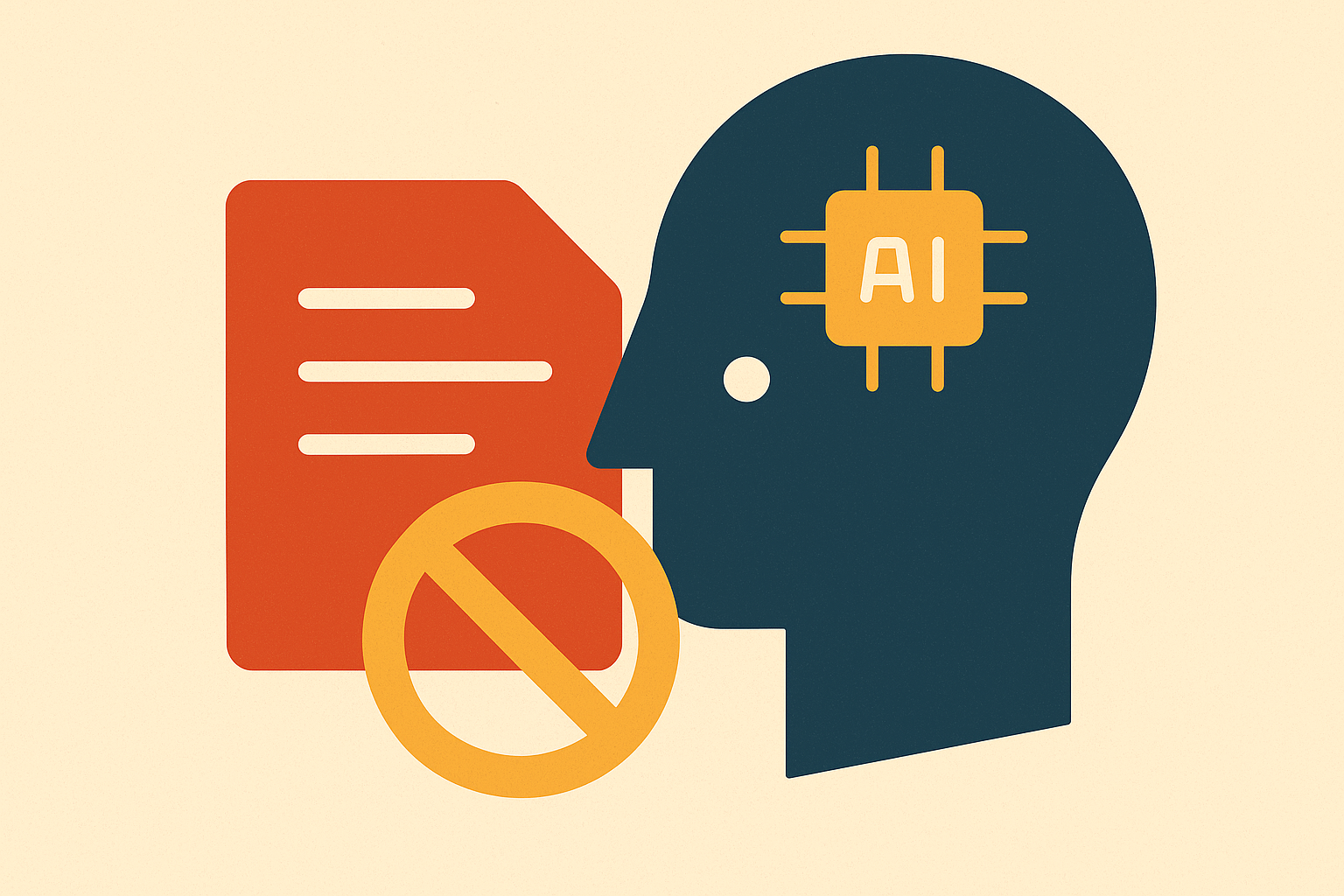
Vendor content can't corroborate itself. That's not a flaw the brand can write its way around. A page can be well-researched, well-cited, beautifully structured, and still get passed over, because the system has already learned that self-interested claims carry less evidential weight than the same claims made independently. A September 2025 paper from Kumar et al. put it directly: even high-quality pages may not get cited if they live only on vendor blogs. The disqualification happens at the level of where the page sits, not what it says.
The scale of this bias, once researchers went looking for it, turned out to be larger than a passing tilt. A September 2025 paper ran large-scale experiments comparing AI citation behavior against traditional search results and found what its authors called "a systematic and overwhelming bias towards Earned media (third-party, authoritative sources) over Brand-owned and Social content". That word, overwhelming, is theirs, appearing directly in the study's own findings. Muck Rack's analysis, covering tens of millions of AI citations from ChatGPT, Claude, and Gemini across 17 industries, backs it up from a different angle: earned media accounts for the large majority of everything these systems cite, while paid and advertorial content barely registers.
None of this bends for production value. A vendor blog post can be sharply written, deeply researched, and expensively designed, and the origin signal still holds: it's a brand talking about itself, and the system evaluates where it came from as carefully as what it says. Polish doesn't change the return address.
The buyer journey now runs through sources the brand never wrote
Forrester found that 89% of B2B buyers have already adopted generative AI, naming it one of their top sources of self-directed research at every stage of the buying process. That's an already-present reality, not merely something to prepare for. It's already embedded in how shortlists get built, before a salesperson ever hears from the buyer. HubSpot's Consumer Trends Report backs this from the consumer side: 72% plan to use AI for shopping more often, and that's stated intent, which tends to undersell where behavior actually lands. Acquia's survey of marketing professionals found most expect AEO to significantly reshape their digital strategy within one to three years, yet only a small share have actually started doing anything about it. That gap between knowing and acting is where a lot of brand visibility is quietly leaking out.
Picture the buyer typing: "best ERP for manufacturing under 200 seats." The answer that comes back cites an independent trade publication, a review aggregator, and an analyst note. The vendor's own product page, no matter how detailed, is absent from the results entirely. This already happened, documented, with a real brand: a search for "best free CRM for small business" surfaced HubSpot as the top recommendation in AI Overviews, but the cited source was Zapier, the source HubSpot did not publish itself. The brand won the recommendation. A third party got the credit, and functionally, earned the click.
That detour through a third party doesn't seem to cost the brand much, and might do the opposite. The buyer shows up pre-sold. A survey by Acquia found that 62% of marketers say they've seen clicks and traffic from search engines decline. And there's no safety net built into a zero-click answer. If a brand doesn't get named in that one synthesized response, there's no second blue link waiting to catch the buyer's attention instead. HubSpot reports that lead conversion from AEO was 3x higher than from other sources, meaning buyers arriving via AI citations arrive more qualified, since the AI answer pre-filtered and endorsed the brand before the click.
Third-party publication is the structural answer to a structural problem
None of this gets fixed by writing a better blog post. The bias runs on origin, not execution, so the only lever that actually moves it is publishing from a source that's genuinely independent of the brand.
A real trade publication, with its own domain, its own name, its own editorial voice, reads as an independent source to an AI system because it structurally is one. It can say something true about a brand from outside that brand's own walls, which is precisely the kind of statement these systems are built to weigh more heavily. The effect compounds: a brand that gets mentioned across several genuinely separate publications, each with its own domain and its own editorial angle, builds cross-source agreement that AI systems read as consensus.
Old-school keyword optimization doesn't transfer here, and in fact works slightly against a brand in this context. Botric.ai's research found that content built purely around SEO conventions has a small negative effect on AI search performance. Not just wasted effort. Mildly counterproductive. The volume play doesn't work either: flooding the web with thin, interchangeable content doesn't accumulate citation authority, because what these systems reward is depth, specificity, and the visible marks of editorial independence, and no amount of quantity substitutes for those.
What follows from all of this is fairly direct: the strongest position available to a brand is to be present across the independent-feeling sources AI engines already trust, publications that function like legitimate niche outlets because they've earned that footing on their own terms, with no structural reason for a model to discount them. AEO was never meant to replace SEO; it's the layering of search optimization, editorial credibility, and visibility intelligence on top of each other. The one variable in that stack that SEO alone has never been able to supply is editorial independence, and editorial independence decides, more than any other factor, whether an AI system ever says a brand's name out loud.
Sources
- Answer engine optimization trends in 2026: How AEO is transforming the landscape
- Answer Engine Optimization (AEO): Your Complete Guide for 2026
- AEO vs SEO: Transforming Digital Strategy for AI Answers 2025 | Acquia
- How AI Assistants Choose Citations (2026) | ContextBolt
- Citation accuracy, citation noise, and citation bias: A foundation of citation analysis
- Why AI Engines Cite Some B2B Vendors and Skip Others - HG Insights
- Why AI visibility starts before search and ends with citations